What to Do If Water Heater Is Leaking
Talk to a Licensed Plumber Now
If your water heater is leaking, shut off the cold water supply valve on top of the tank, then kill the power at the breaker (electric) or turn the gas control to “off” (gas). Open a hot water faucet to relieve pressure. If you smell gas, leave the house and call your gas utility from outside.
First 10 Minutes: What to Do Right Now
- Step 1 — Shut off the cold water inlet valve on top of the tank (turn clockwise). Why: stops the tank from refilling and pushing more water out through the leak.
- Step 2 — If that valve is stuck or you can’t find it, shut off the main water supply to the house. Why: guarantees the leak stops even if the heater’s own valve has failed.
- Step 3 — Cut power at the breaker (electric units) or turn the gas control valve to “off” (gas units). Why: water pooling near electrical components is a shock and fire risk, and you don’t want a gas burner firing on an empty or draining tank.
- Step 4 — If you smell gas at any point, stop everything, leave the house, and call your gas utility or 911 from outside. Why: natural gas is flammable and this is not a DIY situation.
- Step 5 — Open a nearby hot water faucet. Why: relieves pressure in the system so the tank drains more predictably instead of continuing to spray.
- Step 6 — Move anything valuable off the floor and start soaking up standing water with towels or a wet-vac. Why: limits water damage to flooring, drywall, and stored items while you wait on help.
- Step 7 — Photograph the leak and the surrounding damage. Why: you’ll want this for a homeowners insurance claim or a warranty claim with the manufacturer.
- Step 8 — Call a licensed plumber. Why: even a small leak from a water heater usually means either a repairable fitting or a failing tank, and a pro can tell you which in minutes.
Is a Leaking Water Heater Dangerous?
Yes, and not just because of the mess. A leaking water heater creates three separate hazards depending on your unit type and where the water goes.
Electrical hazard. On electric water heaters, water reaching the heating element, thermostat, or wiring at the top of the tank can cause a short, a spark, or in the worst case an electrical fire. If your unit is electric, cut power at the breaker before you touch anything wet near the tank.
Gas hazard. On gas units, a severe leak or tank failure can loosen or damage nearby gas line connections. Natural gas is flammable and can accumulate in an enclosed utility closet or basement. If you ever smell gas near the water heater, treat it as a gas leak, not a water leak — leave the house and call your gas utility or 911 immediately.
Pressure and rupture risk. Every tank water heater has a temperature and pressure (TPR) relief valve whose entire job is to release water before pressure or temperature climbs high enough to rupture the tank. The U.S. Consumer Product Safety Commission has documented rupture and burn hazards tied to failed relief valves, and it’s the reason plumbers take a leaking TPR valve seriously instead of just tightening it and walking away (CPSC.gov). A full tank explosion is rare, but it’s the reason “just a slow drip” still deserves a same-day look, not a someday look.
Where Is the Water Actually Coming From?
Where the water is coming from tells you almost everything about whether this is a $150 fix or a $1,800 replacement. Turn off power and water first (see above), dry the tank exterior with a towel, then watch where moisture reappears.
Leaking from the top or the fittings
Top and fitting leaks are usually the good news scenario. Common culprits: a loose hot or cold water line connection (fittings work loose from thermal expansion over years of heating cycles), a failing cold water inlet valve, or a degraded gasket around the anode rod port, which typically needs attention every 5–8 years. These are almost always repairable without replacing the whole unit — a plumber tightens or reseals the fitting, or swaps the anode rod, and you’re done.
The TPR (temperature and pressure relief) valve
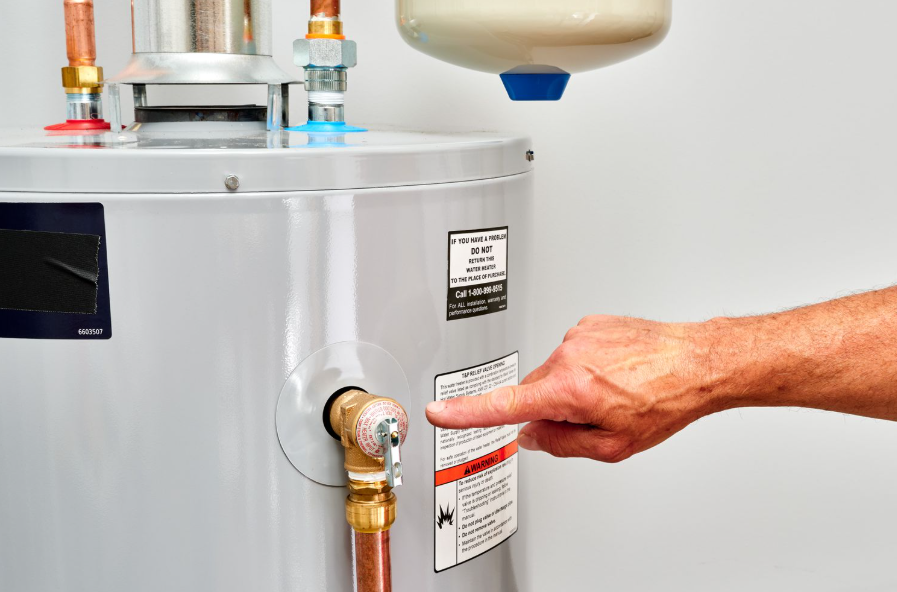
Look at the pipe running down the side of the tank to a discharge point near the floor. If water is dripping from that pipe, your TPR valve is either defective or doing exactly what it’s designed to do — venting because your tank pressure or temperature is too high. Either way, don’t cap it or block it to stop the drip. A blocked relief valve removes the one safety device standing between your water heater and a pressure failure. Call a plumber to test and, if needed, replace the valve.
The drain valve near the bottom
A leak right at the small spigot-style valve near the base is often just a worn washer or a valve body that’s cracked from age. This is a cheap, fast repair — sometimes even a DIY one if you’re comfortable draining and isolating the tank first.
Leaking from the tank itself (bottom, pooling underneath)
This is the leak nobody wants. Sediment builds up at the bottom of the tank over years, and the metal beneath that sediment layer corrodes from the inside out until it perforates. Once the steel tank itself has a hole, there’s no repair — the tank can’t be patched or resealed. If water is pooling underneath the unit and you’ve ruled out the drain valve and fittings above it, you’re almost certainly looking at tank corrosion, and replacement is the only real fix.
DIY Fixes vs. When to Call a Plumber Right Now
Reasonable DIY territory: tightening a visibly loose fitting with a wrench (don’t overtighten — you can crack a fitting), replacing a drain valve washer after the tank is fully isolated and drained, or replacing an anode rod if you’re comfortable with basic plumbing tools.
Call a plumber immediately, don’t attempt DIY, if:
- You smell gas anywhere near the unit.
- The TPR valve is leaking or was recently replaced and is leaking again — this is a pressure safety device, not a maintenance item to defer.
- Water is pooling under the tank itself rather than at a visible fitting.
- Your water heater is electric and you’re not 100% certain the breaker is off before you go near it.
- The unit is more than 8–10 years old — even a repairable-looking leak on a tank this age is often the first sign the whole unit is failing, and throwing a repair at an old tank is frequently a wasted service call.
- You don’t know where the shutoff valves are, or they’re stuck/corroded and won’t turn.
Get Connected With an Emergency Plumber Near You Now
Active leak, gas smell, or water pooling under the tank? Don’t wait on a callback. Fill this out and we’ll match you with a licensed, local plumber who handles emergency dispatch.
By submitting this form, you agree that kennewhouse.com/ may share your information with matched local plumbing providers, who may contact you by phone, text, or email — including by automated means — about your service request. Consent is not a condition of purchase. Message and data rates may apply.
Cost to Repair vs. Replace a Leaking Water Heater
Most water heater repairs run $150 to $600 depending on the part involved, while a full tank replacement typically runs $880 to $2,500 installed, averaging around $1,850 for a standard tank unit. The deciding factor is almost always where the leak is coming from, not how much water you’re seeing.
| Issue | Typical Cost | Repair or Replace |
|---|---|---|
| Loose fitting / inlet-outlet connection | $200 – $400 | Repair |
| TPR valve replacement | $150 – $300 | Repair |
| Drain valve replacement | $100 – $250 | Repair |
| Anode rod replacement | $150 – $350 | Repair |
| Heating element (electric units) | $200 – $500 | Repair |
| Gas control valve | $300 – $750 | Repair (case-by-case) |
| Corroded tank (leaking from bottom) | $880 – $2,500 installed | Replace |
A fair rule of thumb from two decades running dispatch calls: if the tank is under 6 years old and the leak is at a fitting, valve, or connection, repair it. If the tank is over 8–10 years old, or the leak is coming from the tank body itself, put the repair money toward a new unit instead — you’re just delaying the same call a few months down the road.
How to Prevent Future Water Heater Leaks
- Flush the tank periodically to clear sediment buildup, which accelerates corrosion at the tank bottom. The Department of Energy recommends draining a quart of water from the tank every three months on standard storage units (Energy.gov).
- Test the TPR valve every six months by lifting the lever briefly and confirming water discharges, then shuts off cleanly.
- Inspect and replace the anode rod every 3–4 years. This sacrificial rod corrodes so your tank doesn’t — once it’s spent, tank corrosion speeds up fast.
- Watch the age of the unit. Most tank water heaters last 8–12 years. If yours is approaching that range, budget for replacement before it fails on its own schedule.
- Install a drain pan and leak sensor under the unit, especially if it’s on an upper floor or above finished living space.
Will Homeowners Insurance Cover the Damage?
Often yes for the water damage, rarely for the water heater itself. If a water heater fails suddenly and floods your basement or utility closet, most homeowners policies cover repairing the flooring, drywall, and damaged belongings as a sudden, accidental loss. What they typically won’t cover is the water heater itself, and they’ll often deny a claim entirely if the failure was a slow leak tied to age, corrosion, or lack of maintenance rather than a sudden burst. Photograph everything before cleanup and call your carrier the same day — the “sudden vs. gradual” distinction is exactly what adjusters look at first.
People Also Ask
Is it dangerous if my water heater is leaking?
Yes. Water near electrical components can cause shorts or fire on electric units, and a leak near gas connections on gas units raises fire and explosion risk. A leaking TPR valve can also signal dangerous pressure buildup in the tank. Shut off power and water immediately and have it inspected — don’t wait to see if it gets worse.
Can a leaking water heater explode?
It’s rare but possible. Explosions typically happen when the TPR valve fails and pressure inside the tank builds unchecked. The CPSC has documented rupture and burn hazards tied to failed relief valves. A leaking TPR valve specifically — as opposed to a fitting or drain valve — should be treated as urgent, not cosmetic.
Water heater leaking from the bottom vs. the top — what’s the difference?
Top leaks are usually loose fittings, a failing inlet valve, or the anode rod gasket — repairable in most cases. Bottom leaks, especially water pooling directly under the tank, usually mean the steel tank itself has corroded through from sediment buildup. That’s not repairable; it means replacement.
How much does it cost to fix a leaking water heater?
Most repairs run $150 to $600 depending on the part — a TPR valve or drain valve replacement is on the low end, a gas control valve on the higher end. If the tank itself is corroded, you’re looking at full replacement, typically $880 to $2,500 installed for a standard tank unit.
Can I still shower if my water heater is leaking?
If the leak is minor and coming from a fitting or valve — not the tank body — you can often still use hot water briefly while you wait for a plumber. If you’ve shut off the unit for safety, or the leak is from the tank itself, don’t run it; shut it down and use an alternative until it’s fixed.
How long can a water heater leak before it fails completely?
There’s no reliable timeline — a slow drip can continue for weeks, or a small leak can turn into a sudden tank rupture with no warning. Once a tank starts leaking from the body itself, the underlying corrosion doesn’t stop or reverse. Treat any active leak as something to address within the day, not the week.
Does homeowners insurance cover a leaking water heater?
Usually it covers the resulting water damage to your home and belongings if the failure was sudden, but not the cost of the water heater itself. Slow, gradual leaks tied to age or lack of maintenance are commonly excluded. Document the damage and call your insurer the same day you find the leak.
Is a leaking water heater always a sign I need a new one?
No. Leaks from fittings, the drain valve, the anode rod port, or the TPR valve are typically repairable, especially on tanks under 6–8 years old. A leak from the tank body itself — usually showing up as pooling underneath the unit — means the tank has corroded through and can’t be repaired.
What does it mean if my water heater’s pressure relief valve is leaking?
It means either the valve itself has failed, or it’s doing its job by venting because pressure or temperature inside the tank is too high. Don’t cap or plug it to stop the drip — that removes your tank’s main safety device. Have a licensed plumber test and replace it.
Should I turn off my water heater if it’s leaking?
Yes. Shut off the cold water supply to the tank and cut power at the breaker (electric) or turn the gas valve to off (gas) as soon as you notice a leak. This stops the leak from getting worse and removes the electrical and pressure risks while you get it inspected.
What’s the first thing I should do if I find water heater is leaking near my electrical panel or outlets?
Don’t touch anything wet. Go straight to your home’s main breaker panel and shut off power to the water heater circuit before doing anything else, including mopping up water. Once power is confirmed off, shut off the water supply and call a plumber.
What This Means for Your Home Today
A leaking water heater is rarely an isolated problem — if it’s been dripping unnoticed for a while, check the surrounding subfloor, drywall, and any nearby finished space for water damage before you call it done. If the leak damaged a bathroom or utility area badly enough that you’re weighing a bigger renovation, our bathroom addition cost guide breaks down what that kind of project runs. And if you’re dealing with a home emergency backlog this summer, it’s also worth checking your central AC not blowing air guide — plumbing and HVAC failures have a habit of showing up the same week.
For general water heater safety guidance beyond emergency response, the National Board of Boiler and Pressure Vessel Inspectors publishes a residential water heater safety overview, and InterNACHI has a detailed technical explainer on TPR valves and discharge piping if you want to understand exactly how that safety device works. Manufacturer troubleshooting guidance from major tank makers is also a solid reference if you want to identify your specific leak source before a plumber arrives.
Still Leaking? Get Connected With an Emergency Plumber Near You Now
Don’t let a small leak turn into a flooded utility closet overnight. Submit your info and get matched with a licensed local plumber who can respond same-day.
By submitting this form, you agree that kennewhouse.com/ may share your information with matched local plumbing providers, who may contact you by phone, text, or email — including by automated means — about your service request. Consent is not a condition of purchase. Message and data rates may apply.